La Fortuna Coffee Harvest Season
Every other coffee destination answers "when should I come" with a harvest month. La Fortuna does not, and the reason is worth knowing. At 253 metres these are demonstration farms rather than commercial estates, and cacao — the crop that actually thrives here — ripens through the year.
That makes the choice simpler than it is anywhere else in the country. A Costa Rica coffee tour in La Fortuna is decided by the weather and by your own timetable, not by a crop calendar, and the pages below set out what each month actually looks like on the ground.
Costa Rica's picking season, month by month
The national harvest runs roughly November to March. It peaks in November in the highlands of Alajuela and Heredia, starts as early as July in Pérez Zeledón and Turrialba, and finishes in March. Around 70,000 pickers work it, roughly 40,000 of them Costa Rican and most of the rest from Nicaragua and Panama.
National harvest timings as reported from ICAFE figures; La Fortuna rainfall from the local monthly record.
| Month | What is happening nationally | What it changes in La Fortuna |
|---|---|---|
| July to September | Picking begins in the earliest, lowest regions | Nothing. Green season rain is the only variable |
| November | Peak picking in the Alajuela and Heredia highlands | Nothing on the farm; the driest half of the year is starting |
| December to February | The main harvest across the Central Valley | The best weather of the year, and the busiest weeks to book |
| March | The tail of the season | The driest month, 46 mm on average |
| April to June | Flowering and fruit set | Warm, and rain building again |
Why the national calendar does not govern a visit here
Two reasons, and both are in the geography. First, altitude: Costa Rica grades its beans by where they grew, and at 253 metres these farms sit below the bottom of that scale. They are not shipping lots to an exporter, so they are not picking to an exporter's calendar. Second, scale: a demonstration row is picked when the cherries on it are ripe, which happens somewhere on the farm most of the year.
The practical consequence is liberating. Every listing here runs year-round and not one of them advertises a season. A La Fortuna coffee morning is decided by rainfall, not by a crop calendar you cannot control.
What picking actually looks like here
On a highland estate in Tarrazú the harvest is an industrial event. Hundreds of pickers arrive for the season, the mill runs at capacity, and everything is organised around getting cherries off the tree and into water within hours. Nothing on that scale happens in La Fortuna. The difference is worth knowing before you book.
What you get instead is a row or two of trees walked at conversational pace. A guide hands you a basket and shows you which cherries are ready and which are a week away. Between November and March there are usually enough ripe ones to pick a handful. Outside that window the trees carry green fruit and the guide explains the curve instead.
The rest of the chain happens in front of you either way — pulping, fermenting, drying, roasting, grinding, brewing. The beans on the drying bed were picked weeks ago and are waiting their turn. That is the trade: you lose the spectacle of a real harvest and you gain the whole process in an afternoon, on ground you can cross in ten minutes.
Cacao has no season worth planning around
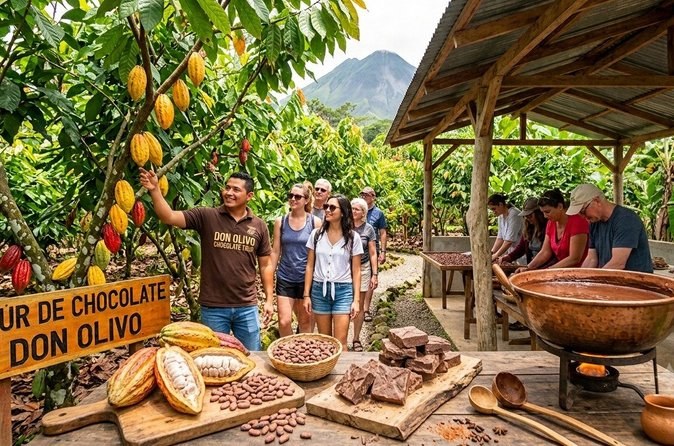
Cacao trees flower and fruit more or less continuously in this climate, with two looser peaks rather than a single harvest. That is why one farm here produces around 150 pounds a week from 1,600 trees without a closed period. It is also why the chocolate half of a tour is the same in October as in February.
If your reason for coming is the chocolate — and for most visitors here it should be — the calendar simply does not apply. Book the month that suits the rest of your trip.
What you will actually see, whenever you come
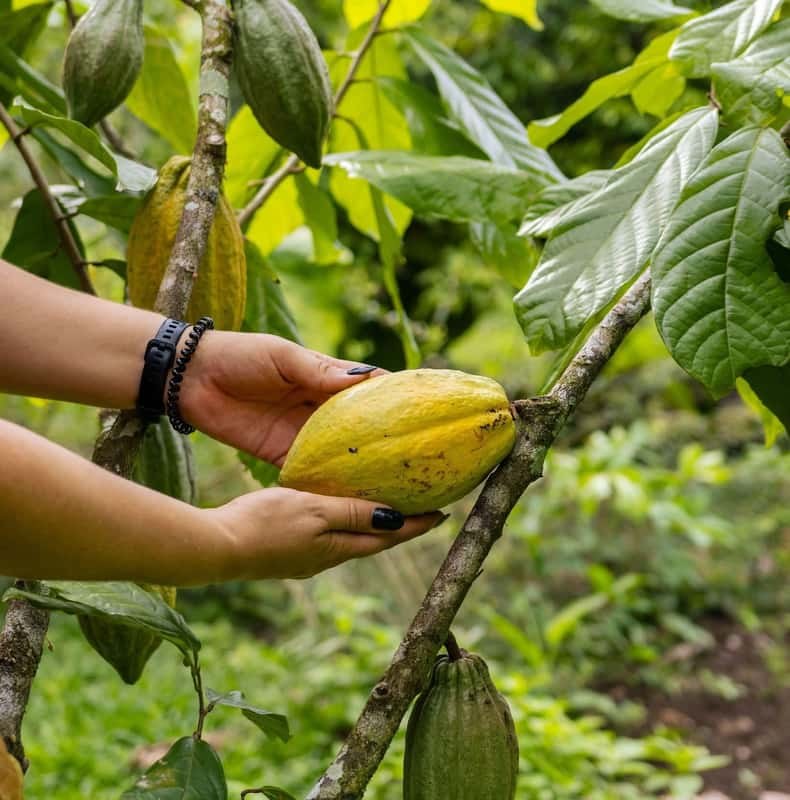
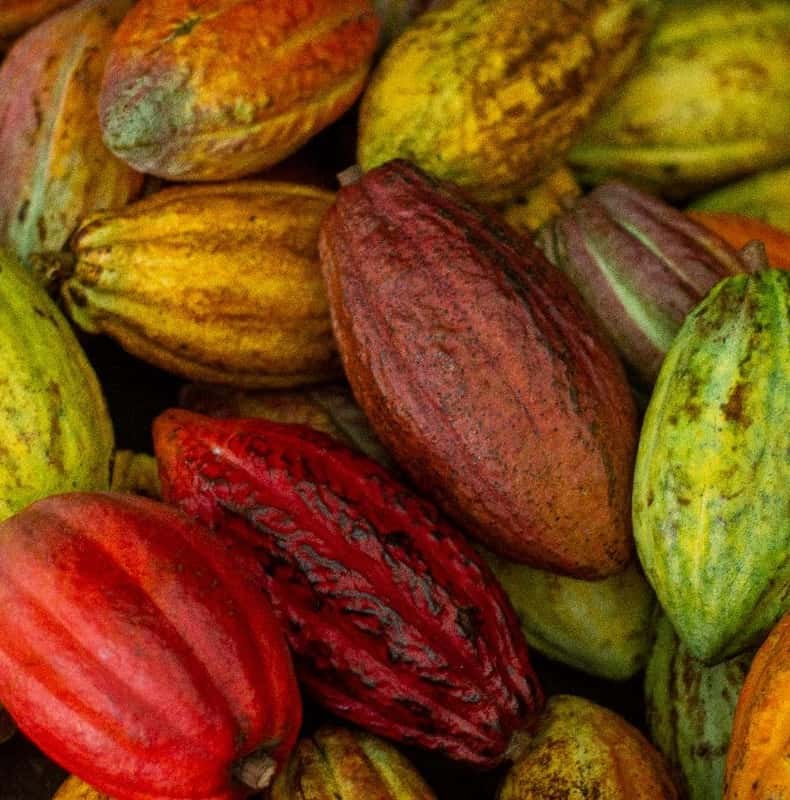
- Cacao pods on the trunk, in several colours. Green, yellow, red and purple depending on variety and ripeness, in every month.
- Fermentation boxes and drying beds in use. Continuous, because the cacao is.
- Coffee cherries somewhere on the ripening curve. Reliably red and pickable in the November-to-March window; green or patchy outside it.
- Roasting, grinding and the tasting table. Every day of the year, because the farms roast to demonstrate rather than to export.
How the harvest changes what you taste
Less than the calendar suggests. The coffee you drink on a La Fortuna farm was not picked this morning: it was picked, pulped, fermented, dried and rested weeks ago, then roasted in front of you on the day. The roast is where a coffee's flavour is made. Come in June and the cup in your hand is as fresh as the one in January.
Cacao is even less seasonal in the cup. Fermentation and drying take the beans out of the calendar entirely. The chocolate you taste has been through the same weeks-long process whenever you arrive. The only seasonal thing on the table is the tropical fruit two of these farms hand round, and that changes flavour rather than disappearing.
Choosing a month, if the trip is flexible
Set the coffee calendar aside and the decision gets simple. December to April is dry, bright and busy, and it is the window where the volcano is most likely to be out from behind its cloud. May to November is wet, green, quiet and cheaper to travel in, with mornings that usually stay clear and afternoons that usually do not.
If ripe cherries on the tree matter to you, aim at the overlap. November through March gives you the dry weather and the national picking window at once. If what you want is the chocolate, the grinding and a guide with time to answer questions, the quiet green-season months give you more of all three.
Booking around the calendar
The season that matters here is the tourist one, not the agricultural one. December to April is the dry half and the busy half: give a booking a week over Christmas and through the spring break, and two to five days the rest of the year. Every tour on this list cancels free up to 24 hours ahead, which is the real insurance in a place this changeable.
If you want ripe red cherries on the tree as well as everything else, come between November and March. If you want the fullest chocolate morning, come whenever you like. Both are bookable through La Fortuna Coffee Tours, and what a farm morning looks like covers the shape of the day itself.