What You Learn on a La Fortuna Coffee Tour
Two crops, two completely different chains, both compressed into one farm you can walk across. A La Fortuna morning is unusual because you see every stage of both in the place they happen, rather than reading about the ones that happen somewhere else.
That compression is the whole argument for coffee tours in La Fortuna over a highland estate visit: an estate shows you a section of the chain and ships the rest elsewhere, while a smallholding this size has to do all of it in one yard.
Coffee, tree to cup, in seven steps
- The nursery. Seedlings raised in beds before they go into the ground, which is where a coffee tree's four-year wait to first crop begins.
- The picking rows. Ripe cherries picked by hand, red ones only, which is the whole quality decision in one gesture.
- Pulping. The skin and flesh stripped off, usually through a hand-cranked mill you get to turn.
- Fermentation and washing. The sticky mucilage broken down in water over a day or so, then rinsed away.
- Drying. Beans spread on beds or patios until the moisture is right, which on the wetter half of the year is the hardest part of the job.
- Roasting. Over a fire or in a drum, in front of you, which is where the smell arrives.
- Grinding and brewing. Usually through a cloth chorreador, the Costa Rican filter, and then into your hands.
Cacao, pod to bar, in six
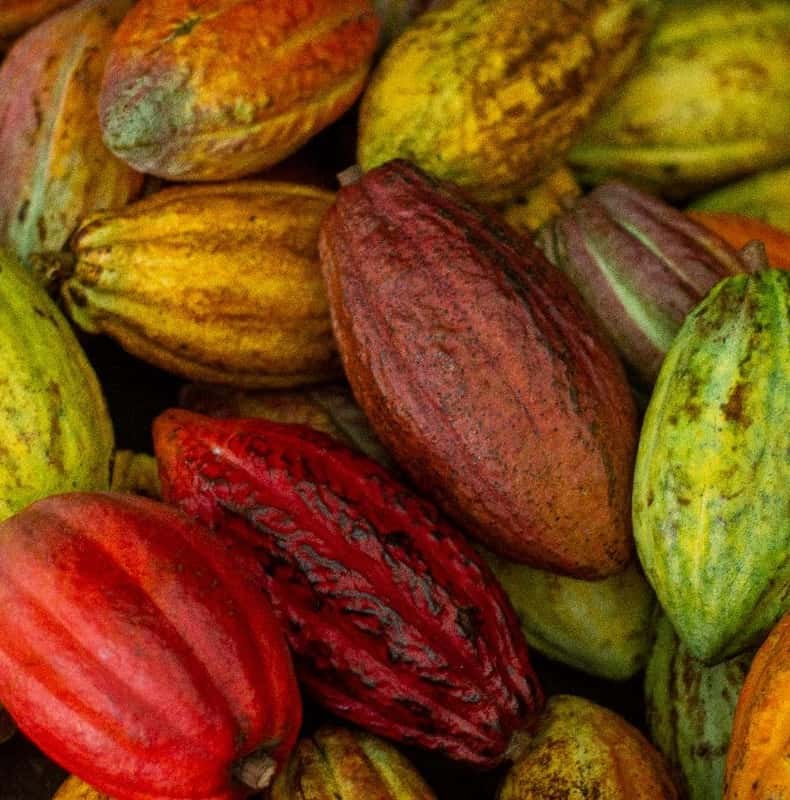
- The flower and the pod. Cacao flowers grow straight out of the trunk, which is the detail nobody believes until they see it.
- Opening. The pod split by hand and the beans lifted out in their white pulp, which you taste before it is anything like chocolate.
- Fermentation. Days in wooden boxes under banana leaves, where almost all of the flavour is actually made.
- Drying. Spread in the sun on raised beds until they rattle.
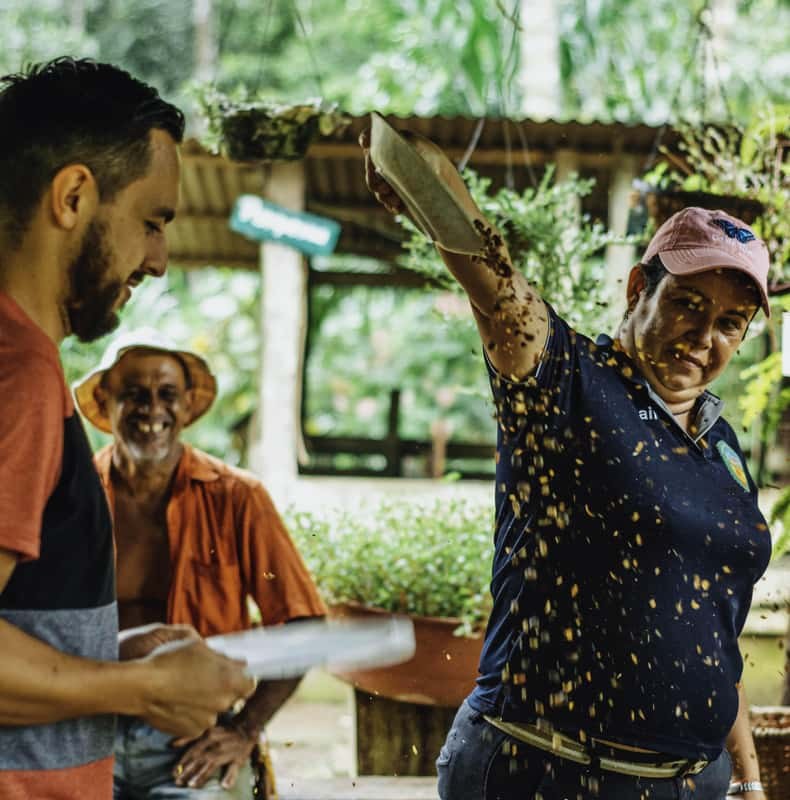
- Roasting and winnowing. Roasted, cracked, and the husk blown off to leave the nibs.
- Grinding and moulding. Ground on a stone or in a mill to a paste, then sweetened, tempered and set — on two farms, into bonbons you take away.
Where the two processes part company
They look similar for the first two steps and then split completely. Coffee is a seed you dry and then burn — the roast is where its flavour is made, and everything before it is preservation. Cacao is a seed whose flavour is made in the fermentation box, days before it goes anywhere near heat, and the roast is a comparatively gentle finish.
| Stage | Coffee | Cacao |
|---|---|---|
| Where flavour is made | In the roast | In the fermentation box |
| Fermentation length | Around 24 to 36 hours, in water | Several days, in boxes |
| Roast | Hot and dark, minutes matter | Gentler, and shorter |
| What you do with it | Grind and brew | Grind, sweeten, temper, mould |
| Time from tree to table | Weeks | Weeks |
| Grows well at 253 m | Not really | Very well indeed |
What your hands actually do
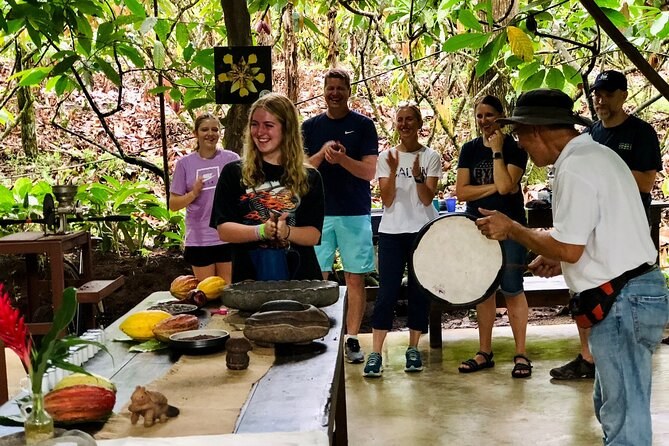
More than you expect. Across these tours you will turn a pulping mill, crack roasted cacao, blow the husk off nibs, grind on a stone, work a wooden mortar and pour through a chorreador. On one farm you pick your own cherries and roast them; on two you mould chocolates and choose what goes into them.
None of it requires strength or balance, and none of it is a demonstration you watch from behind a rope.
The part nobody explains: fermentation
It is the least photogenic stage of both crops and the one that decides how they taste. In a cacao box, wild yeasts and bacteria work through the pulp and drive chemical changes inside the bean that create the precursors chocolate flavour is built from. Skip it or rush it and no amount of skill afterwards recovers the difference.
Farms that show you an open box, rather than pointing at a closed one, are giving you the most valuable ten minutes of the morning.
What you take away
Besides a bag of something, the useful thing is a set of reference points. You will know what unroasted cacao tastes like, why a bar with a percentage on it means what it means, why washed coffee tastes cleaner than natural, and what a cherry looks like when it is ready. The tasting table where you check all of that is covered on the tastings page.
What a farm tour here is not
It is not a cupping course, and it is not a highland estate visit. Nobody will hand you a scoring sheet or walk you through a sensory wheel, and the coffee you drink was not grown at the altitude that wins competitions. What it is, is the entire chain of two crops in one place, taught by the family who work it. Where to start is set out on visiting, and every tour named above is listed on La Fortuna Coffee Tours.