La Fortuna Coffee Tastings and Workshops
Four things end up on the table on a La Fortuna farm, and only one of them is coffee. Here is what each of them actually is, which tours pour it, how much of it you get, and what is worth carrying home.
The coffee, and what 253 metres does to it
Costa Rica grades green coffee by the altitude it grew at. Strictly Hard Bean comes from above about 1,200 metres, Good Hard Bean from 1,000, and Medium Hard Bean from below that. La Fortuna sits at 253 metres, under the bottom of the scale. That is why the coffee here is a teaching crop rather than an export lot.
What you get instead is freshness that no bag can match. The cherries come off the tree in front of you, the beans go into a pan or a drum while you watch, and the cup is poured minutes later. It is arabica. Costa Rica banned planting robusta in 1989 to push the country to arabica alone; the ban was lifted in 2018 for warmer regions, and the crop is still overwhelmingly arabica. On one farm you pick, roast and grind your own and drink the result.
Worth knowing. The eight regions Costa Rica is famous for — the Central and West Valleys, Tarrazú, Tres Ríos, Orosi, Turrialba, Brunca and Guanacaste — are all higher and cooler than this one. A La Fortuna farm morning is not a substitute for a highland estate visit, and it is a far better introduction.
The chocolate, from pod to bar
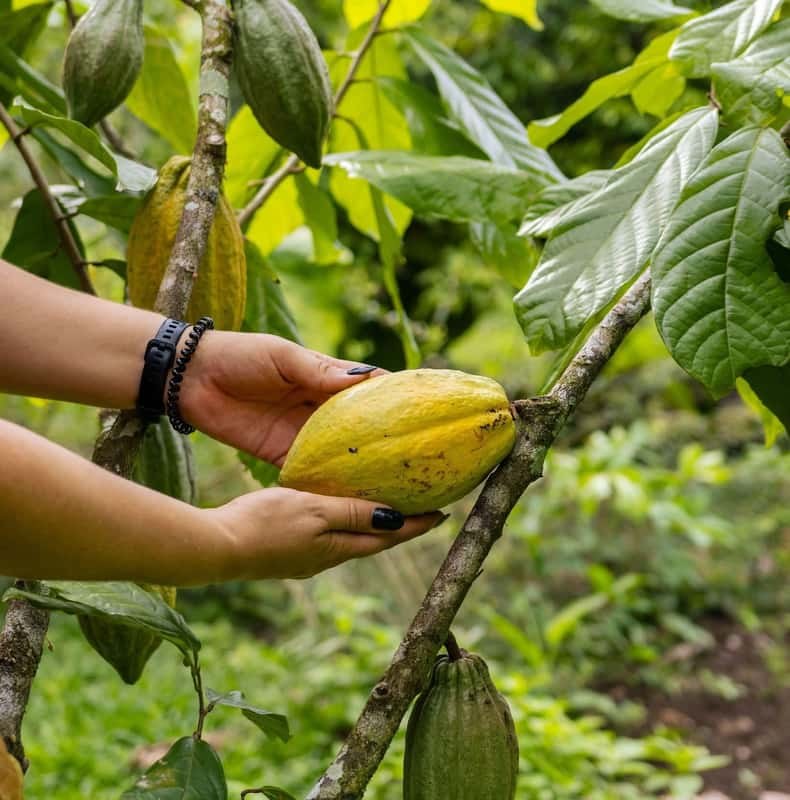
This is the crop the ground was made for, and the reason a coffee and chocolate tour in La Fortuna sells itself as two things rather than one. Warm, wet lowland on the Caribbean slope suits cacao in a way it does not suit coffee. It shows: all but one of the listings in La Fortuna put cacao on the table, and on several of them it is the better half of the morning.
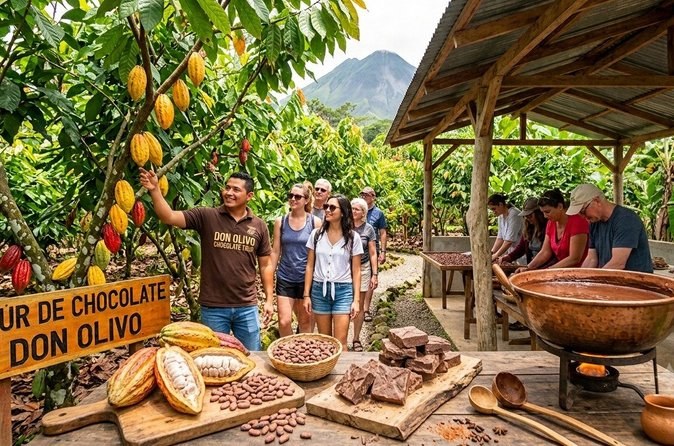
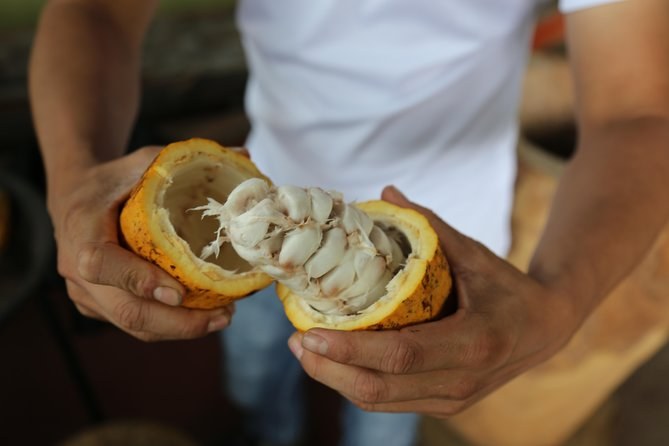
The tasting normally runs in stages, because the point is the transformation. You taste the white pulp around the raw bean first, which is sweet and citric and nothing like chocolate. Then the roasted bean, bitter and nutty. Then the ground mass, then the finished bar — dark, milk and white on the two-in-one trail — and often a drink made the pre-Columbian way, thick and unsweetened. Two farms let you mould your own bonbons with spices and toppings you choose.
Sugar cane, and why it is on the table
Cane gets pressed in front of you on three of these farms, usually through a hand-turned mill, and the juice is poured straight from it. It belongs to the same farm economy as the other two crops. It is also the sweetener the chocolate drink was originally made with.
Fresh cane juice is grassy and much less sugary than the word suggests. On one farm it comes with the coffee and the chocolate as a third demonstration. On another it is folded into the wildlife morning as the last stop before you leave.
Stingless-bee honey
One farm builds its entire tour on Costa Rica's native meliponas — small stingless bees kept here long before the European honeybee arrived. Their honey is thinner and sharper than the honey most visitors know, and it comes in more varieties than anyone expects, because different species make different things.
The tour opens at the hives and explains the bees' role in the forest around them. You taste the varieties side by side before moving on to the cacao and the coffee. It is the only tasting here that has nothing to do with either.
What is unlimited and what is a sample
The honest answer is that it varies, and the listings say so. One farm states plainly that its coffee, honey and chocolate tasting is unlimited. Another pours without a stated limit at the end of the tour. Most of the rest give you a proper sample of each stage rather than a cup of each — which is the right amount when there are five stages.
Counted across the listings captured on 2026-08-29.
| What you taste | Which tours pour it | How much |
|---|---|---|
| Brewed coffee | Almost all of them | A cup, sometimes two grades |
| Chocolate at several stages | All but one | Samples through the process |
| Sugar cane juice | Three farms | A glass, pressed in front of you |
| Stingless-bee honey | One farm | Several varieties, unlimited |
| Tropical fruit and spices | Two farms | Handed over as you walk |
| Rum | One farm | A measure at the end |
Taste your way through a morning
Coffee, cacao, cane and honey, on farms that grow all of them within a few kilometres of the same town. Compare what each tour actually pours.
Taking it home
Every farm sells its own. One tour includes a small bag of coffee in the fare and lists extra bags and handmade souvenirs as things you can buy on the day. The rest sell roast, bars and honey at the end, at the farm's own prices. Cash is always accepted and cards sometimes are.
Nothing here is a hard sell, and the shop is the last stop rather than the point. But the coffee is roasted on the property and the chocolate is made there, so it is the one souvenir in town whose provenance you watched. The process behind it is set out on what you learn. The tours that pour the most are listed on La Fortuna Coffee Tours.
Tours with the fullest tasting table
North Fields Cafe: Craft Specialty Coffee and Chocolate Tour
Hotel pickupTastingsMax 15
From $46 per person