Inside a La Fortuna Coffee Farm
Short answer. A farm morning moves through six working stations: the nursery, the picking rows, the pulper and fermentation boxes, the drying beds, the roasting shed and the tasting table. Most of the time goes to the last three, and most of the hands-on part happens there too.
Travel writing about coffee tends to stop at the view over the rows. The part that actually explains what is in your cup happens in a concrete yard behind the ranch, and on a La Fortuna smallholding you can see all of it in about ninety minutes. Here is the farm, station by station.
The nursery
The first stop on most tours, and the one people walk past. Seedlings are raised in beds under shade before they go into the ground, and a coffee tree then waits three or four years before its first proper crop. Cacao takes a similar wait. It is a useful first fact, because it explains why nobody plants either crop casually.
The picking rows
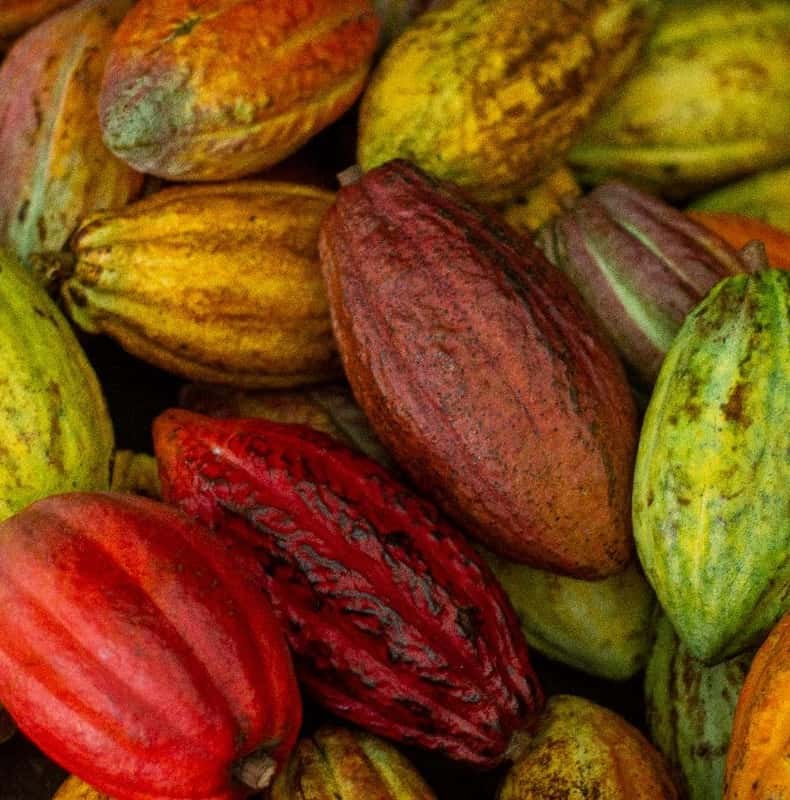
Twenty to forty minutes of gently sloping ground, with stops. Here the guide shows you a cherry that is ready and one that is a week off, and hands you a basket if the timing is right. Cacao pods grow straight out of the trunk rather than off branches, which is the detail nobody believes until they see it, and the pods come in green, yellow, red and purple depending on variety.
Between November and March you will usually find enough ripe cherries to pick a handful. Outside that window the guide explains the ripening curve instead, and the cacao carries on regardless.
The pulper and the fermentation boxes
The working heart of the yard, and where the two crops separate. Coffee cherries go through a hand-cranked pulper that strips skin and flesh, then sit in water for a day or so while the sticky mucilage breaks down. Cacao beans go straight into wooden boxes under banana leaves for several days.
That difference matters more than any other on the farm. Coffee's flavour is made in the roast; cacao's is made in the box, days before it meets heat. Rush the fermentation and no skill afterwards recovers it. A farm that opens a working box for you is giving you the most valuable ten minutes of the morning.
The stage to pay attention to. If you only remember one station, make it the fermentation boxes. It is the least photogenic part of the yard and the one that decides how your chocolate tastes. Both chains, step by step.
The drying beds
Raised beds or a concrete patio, with beans turned by hand. In the dry months this is straightforward. Between May and November it is the hardest job on the farm, which is why raised beds under a roof are common here and why you will often see a tarpaulin half-drawn across them.
Cacao beans dry until they rattle. Coffee dries to a specific moisture content, and getting it wrong in either direction costs the crop. It is a good place to ask what the farm does when it rains for a fortnight.
The roasting shed
The moment the tour turns from agriculture into food. Roasting happens in a drum or a pan over a wood fire, in front of you, and the smell arrives about ninety seconds in. Cacao gets a gentler, shorter roast than coffee, then is cracked and winnowed so the husk blows off and the nibs stay.
On one farm you roast your own coffee, having picked it yourself twenty minutes earlier. On two others you grind roasted cacao on a stone or through a mill until it turns from powder into a dark paste, which is the single most surprising thing most visitors see all morning.
The tasting table
Everything lands here, in stages rather than all at once. The table is usually inside an open-sided rancho, which is why the rain rarely matters.
Timings drawn from the durations and itineraries the farms publish.
| Station | Roughly how long | What you do |
|---|---|---|
| Nursery | 5 minutes | Listen |
| Picking rows | 20 to 40 minutes | Taste fruit, pick if in season |
| Pulper and fermentation | 10 to 15 minutes | Turn the mill, smell the box |
| Drying beds | 5 to 10 minutes | Handle dried beans |
| Roasting shed | 15 to 20 minutes | Roast, crack, winnow, grind |
| Tasting table | 20 to 30 minutes | Taste every stage, mould chocolate |
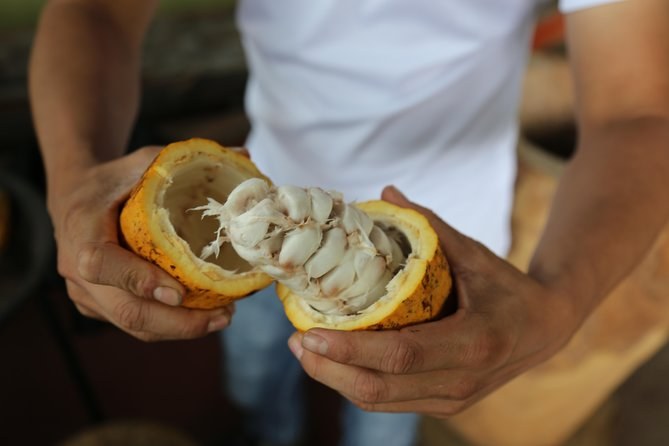
- Raw cacao pulp — sweet, citric and nothing like chocolate.
- Roasted nib — bitter, nutty, and the point at which people change their minds about what chocolate is.
- Ground mass and finished bar — dark, milk and white on the two-in-one trail.
- Coffee through a chorreador — the Costa Rican cloth filter, usually poured at the table.
- Sugar cane juice on three farms, and stingless-bee honey on one.
What the guides are actually doing
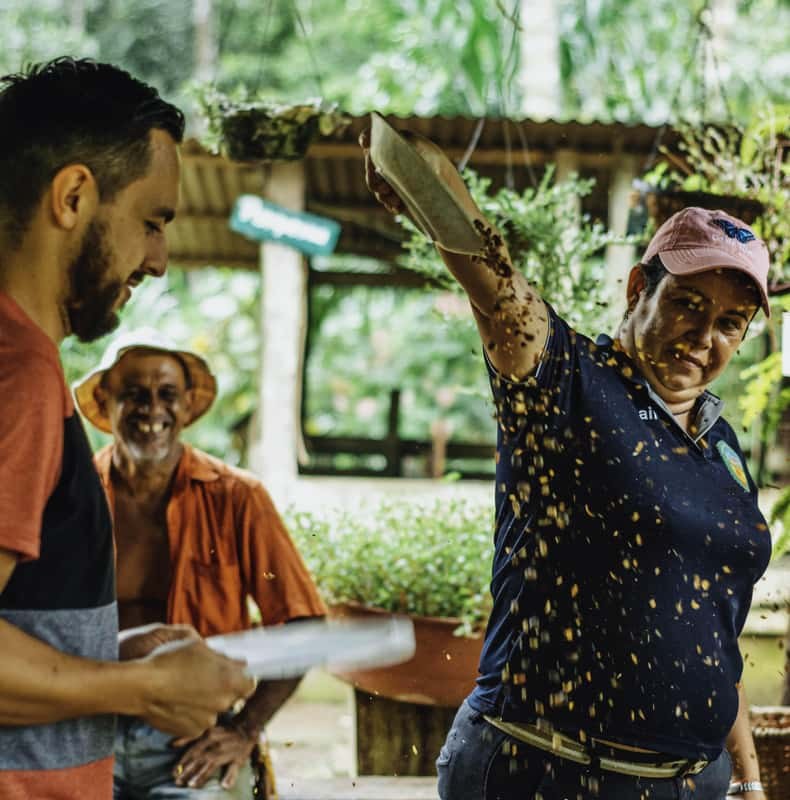
On a farm this size the guide is usually family, or has worked the ground long enough to be treated as such. That is why the questions go somewhere: ask what happens when it rains for a fortnight during drying and you get an answer about last October rather than a line from a script. Several of these farms name the grandfather who planted the trees, and one has been in the same family for more than forty years.
It also changes the pace. Nothing on the route is timed to the minute, so a group that wants to spend twenty minutes at the fermentation boxes generally gets to. If you are interested in one station in particular, say so at the rancho before you set off.
What the wildlife has to do with it
More than you would expect. A working smallholding with shade trees, fruit and flowering cacao is good habitat, so sloths, toucans, coatis, armadillos and red-eyed tree frogs turn up on these farms without being part of the itinerary. Two of the tours in town make that explicit by pairing a guided trail with the tasting, and the guides there carry tripod-mounted spotting scopes.
On the rest it is a bonus rather than a promise. Walk quietly at the back of the group and look up at the cecropia trees, which is where the sloths are.
What a farm looks like when it rains
The two stations that matter most are already under a roof on every farm here, because the open-sided rancho is the building this region is organised around. Only the walk through the planting is exposed, and one farm has covered that too, with cement paths from one end of the trail to the other. Rain changes the drying beds more than it changes your morning: you will see a tarpaulin half-drawn and a farmer watching the sky, which is a more honest picture of the work than a dry day gives you.
The shop, and the walk back out
Almost every farm finishes at a small shop selling its own roast, bars and honey. It is a last stop rather than the point, and the provenance is the shortest you will find anywhere. Bring cash. What is on the shelves tour by tour is on the tastings page, and the practical side of getting there is on visiting.
The farms that give the yard the most time are worth the extra half hour. All of them are listed on La Fortuna Coffee Tours.
Tours that walk you through every station
North Fields Cafe: Craft Specialty Coffee and Chocolate Tour
Hotel pickupTastingsMax 15
From $46 per person